Voice AI Agents Can Now Run Your Front Desk: A Small Business Playbook
Voice AI crossed a line in 2026. Here is how to use it for your front desk without breaking the calls that matter.
Eric Rapaport, Founder
Quick Summary
Voice AI agents improved in 2026 with lower latency and the ability to take actions in your tools through standard connectors. They pay off in high-volume, low-complexity calls like confirming appointments and answering hours, not in hard calls like disputes or nuanced sales. Set up safely by starting with a narrow scope, connecting the agent to your second brain for real business context, and reviewing the first fifty calls before widening what it can do. A voice agent without context is a fancy answering machine. Connected to a second brain, it becomes a front desk that actually works.
Voice AI Agents Can Now Run Your Front Desk: A Small Business Playbook
Voice AI crossed a line in 2026. The best voice agents now hold a natural phone conversation, handle interruptions, and take real actions in your systems, not just read a script. For a small business that answers the phone all day, that is a serious tool.
What changed
Two things improved at once. Latency dropped enough that the agent does not feel like a robot pausing between turns. And the agents can now connect to your tools through standard interfaces, so a caller can book an appointment, check a price, or leave a message that lands in your system without a human typing it in.
Where it actually pays off
Voice AI pays off in the calls that are important but not worth pulling a person off their work to handle. Confirming an appointment, answering hours and location questions, taking a message, routing a call to the right person. These are the calls that eat a receptionist's day and that a good voice agent can handle cleanly.
It does not pay off yet for the hard calls. An upset customer, a complex dispute, a nuanced sale. Route those to a human from the start. The goal is not to replace your front desk. It is to clear the noise so your people handle the calls that need a human.
How to set it up safely
Start with a narrow scope. Give the agent a short list of things it can do: answer hours and location, book from your calendar, take a message. Do not let it make promises or quote custom prices. Connect it to your second brain so it has your real business information, not a guess. Record the calls and review the first fifty before you widen its scope.
The connection to a second brain
A voice agent without context is just a fancy answering machine. Connected to your second brain, it has your policies, your prices, your calendar, and your customer history. It can answer with confidence and hand off to a human with a clean summary. That is the difference between a gadget and a front desk that actually works.
Rather have this built for you? That's what we do.
Leave a Comment
Comments (0)
Related Articles

Autonomous AI agents are moving beyond simple chatbots to handle complex, multi-step tasks without human intervention. For small business owners, this shift represents a major opportunity to reclaim time and scale operations effectively.
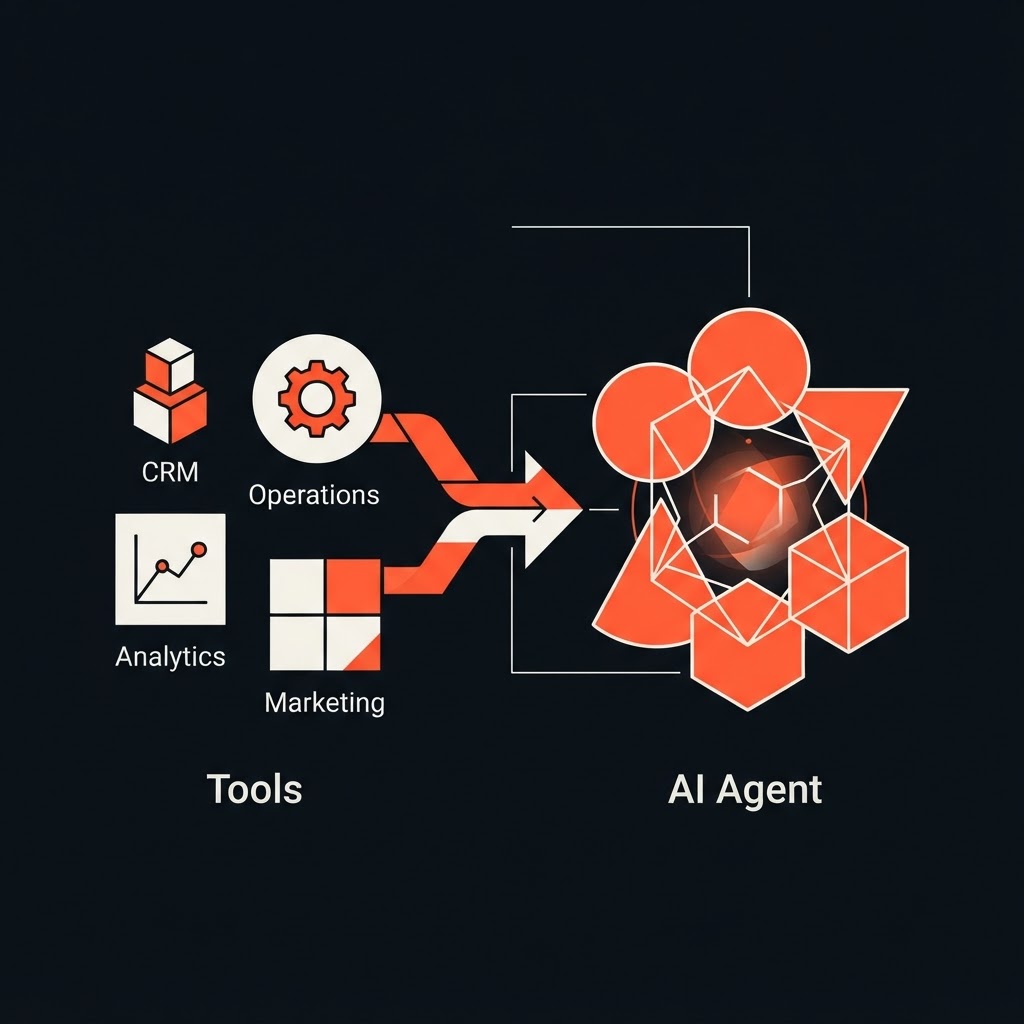
Small businesses are shifting from simple AI tools to autonomous agents that manage entire workflows. Discover how an AI second brain provides the context these agents need to succeed.
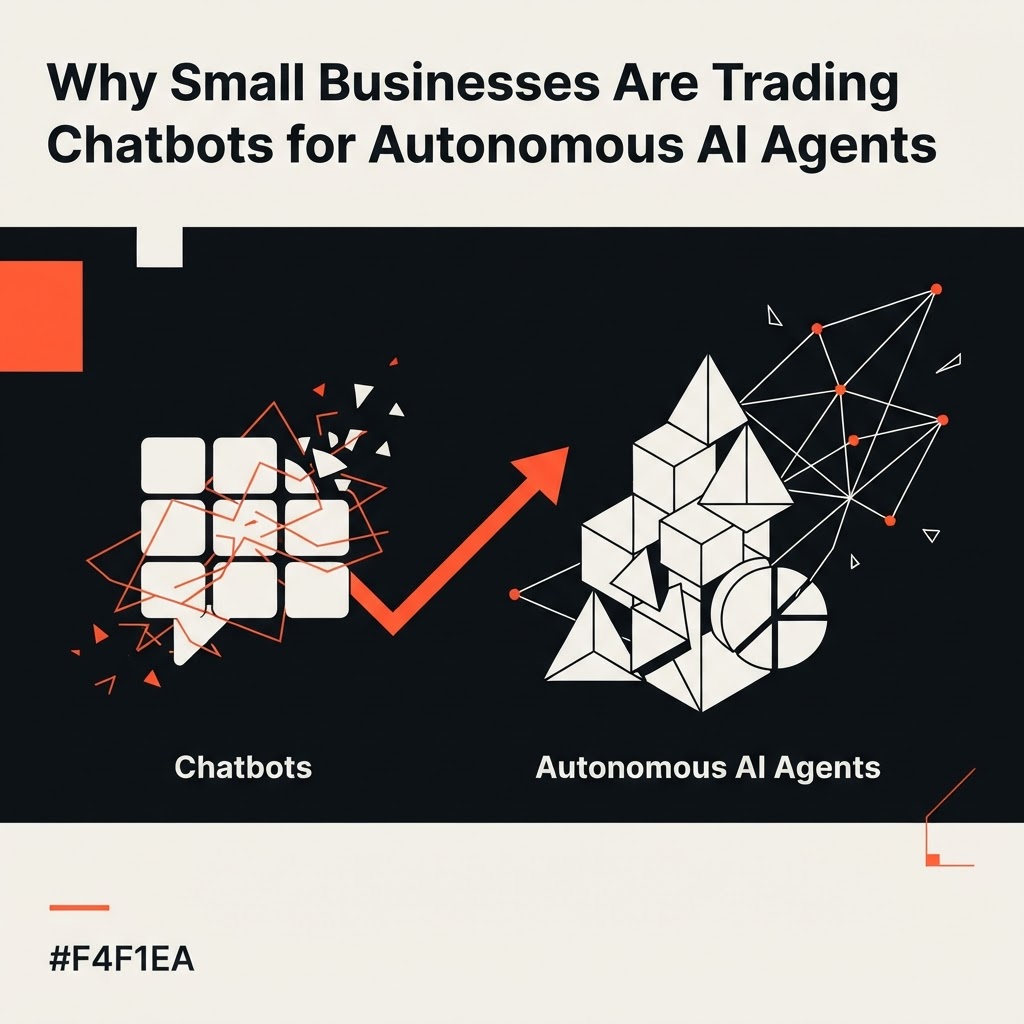
The era of simple AI chatbots is ending as autonomous agents take over daily business operations. Discover how these digital coworkers are helping small teams do more with less.