Why Autonomous AI Agents Are the New Standard for Small Business Efficiency
Autonomous AI agents are moving beyond simple chatbots to handle complex, multi-step tasks without human intervention. For small business owners, this shift represents a major opportunity to reclaim time and scale operations effectively.
Eric Rapaport, Founder
Quick Summary
Recent industry data shows that 2026 is a turning point for small businesses adopting autonomous AI agents to manage customer support, sales, and scheduling. Unlike basic tools, these agents can plan and execute complex workflows, leading to significant cost savings and improved customer satisfaction. By integrating these agents into an AI second brain, business owners can centralize their operations and automate routine tasks. This approach allows small teams to compete with larger enterprises by focusing on high-value strategy rather than manual execution.
Why Autonomous AI Agents Are the New Standard for Small Business Efficiency
For years, artificial intelligence in the small business world was synonymous with basic chatbots. These tools could answer simple questions, but they often fell short when faced with real-world complexity. That era is ending. In 2026, we are seeing a shift toward autonomous AI agents that do not just talk, but actually do the work.
Moving Beyond the Chatbot
Traditional AI tools required constant human oversight. You had to prompt them, review their output, and manually move that data into your CRM or accounting software. Autonomous AI agents change this dynamic. These systems can plan, execute, and chain together complex tasks without needing a human to click every button.
Recent research highlights the impact of this transition. Small businesses deploying these agents in customer service roles have reported a 28 percent increase in satisfaction and a 40 percent reduction in support costs. When an agent can handle after-sales inquiries, suggest complementary products, and process returns automatically, the business owner is free to focus on growth rather than troubleshooting.
The Power of an AI Second Brain
While individual agents are powerful, they are most effective when they function as part of a cohesive system. This is where the concept of an AI second brain becomes essential for small and medium businesses.
Think of your second brain as the central nervous system of your company. It is a repository of your processes, data, and institutional knowledge that connects your various AI agents. Instead of having fragmented tools for sales, scheduling, and invoicing, an AI second brain integrates these functions. It ensures that when an agent qualifies a lead on LinkedIn, that information is immediately available for your quoting tool and your follow-up email sequence.
By building this infrastructure, you stop treating AI as a collection of disconnected experiments and start using it as an operating system. This allows you to work faster because your systems are talking to each other, reducing the friction that usually slows down small teams.
Getting Started with AI Implementation
Many business owners feel overwhelmed by the pace of change. The most important step is to stop waiting for the perfect moment and start small. Industry experts suggest that the primary barrier to success is not the technology itself, but the quality of your data and your internal strategy.
Before you deploy an agent, map out your manual workflows. Identify the tasks that are repetitive, rule-based, and time-consuming. These are the perfect candidates for automation. Once you have a clear view of your processes, you can begin to layer in AI agents that handle these specific tasks.
Scaling Your Competitive Advantage
Data shows that nearly 90 percent of small business owners report that AI saves them time each week. For many, this adds up to six hours or more of reclaimed time. In a small business, six hours is not just a number; it is the difference between staying stagnant and finding the time to launch a new product or enter a new market.
As you integrate these tools, remember that the goal is not to replace your team, but to augment their capabilities. By offloading the heavy lifting of data entry, scheduling, and routine communication to an AI second brain, you empower your employees to do the creative, high-level work that only humans can provide. This is how small businesses will compete and win in the coming years.
Rather have this built for you? That's what we do.
Leave a Comment
Comments (0)
Related Articles
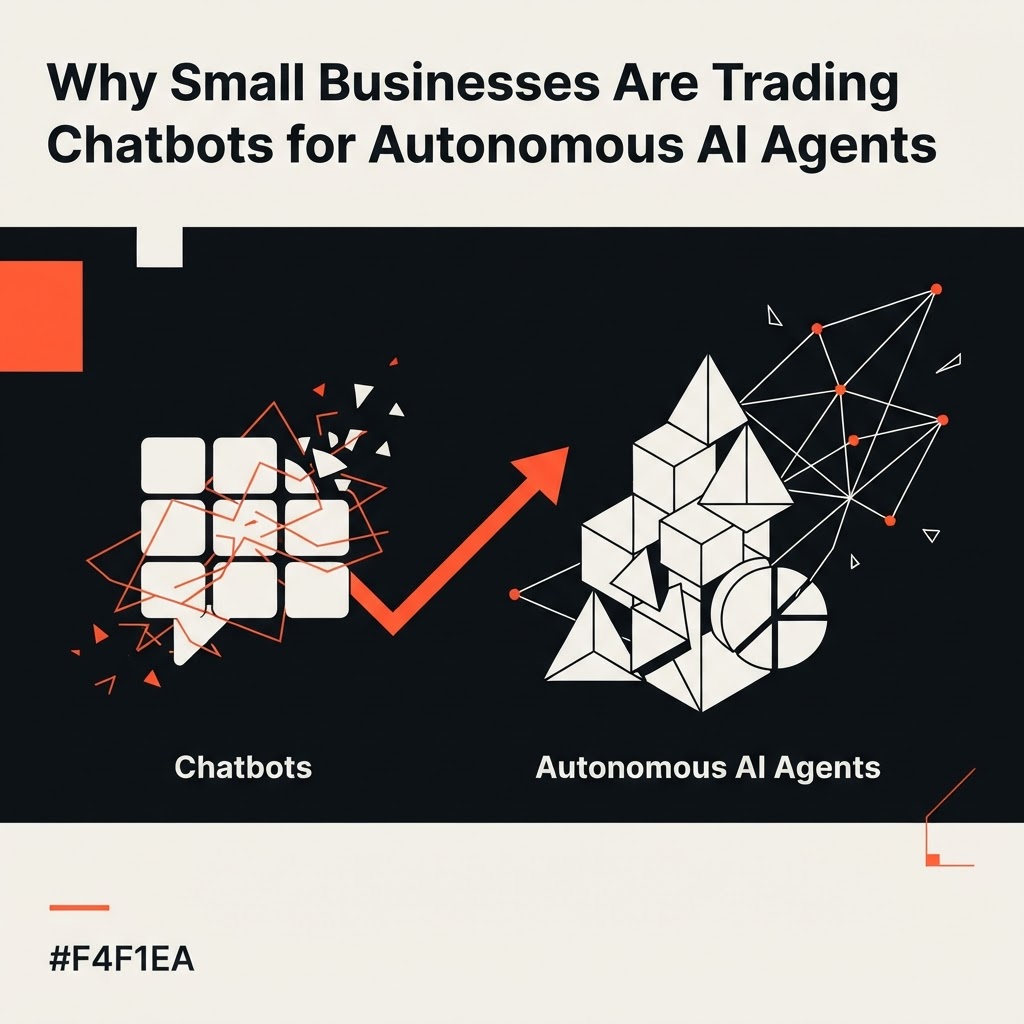
The era of simple AI chatbots is ending as autonomous agents take over daily business operations. Discover how these digital coworkers are helping small teams do more with less.
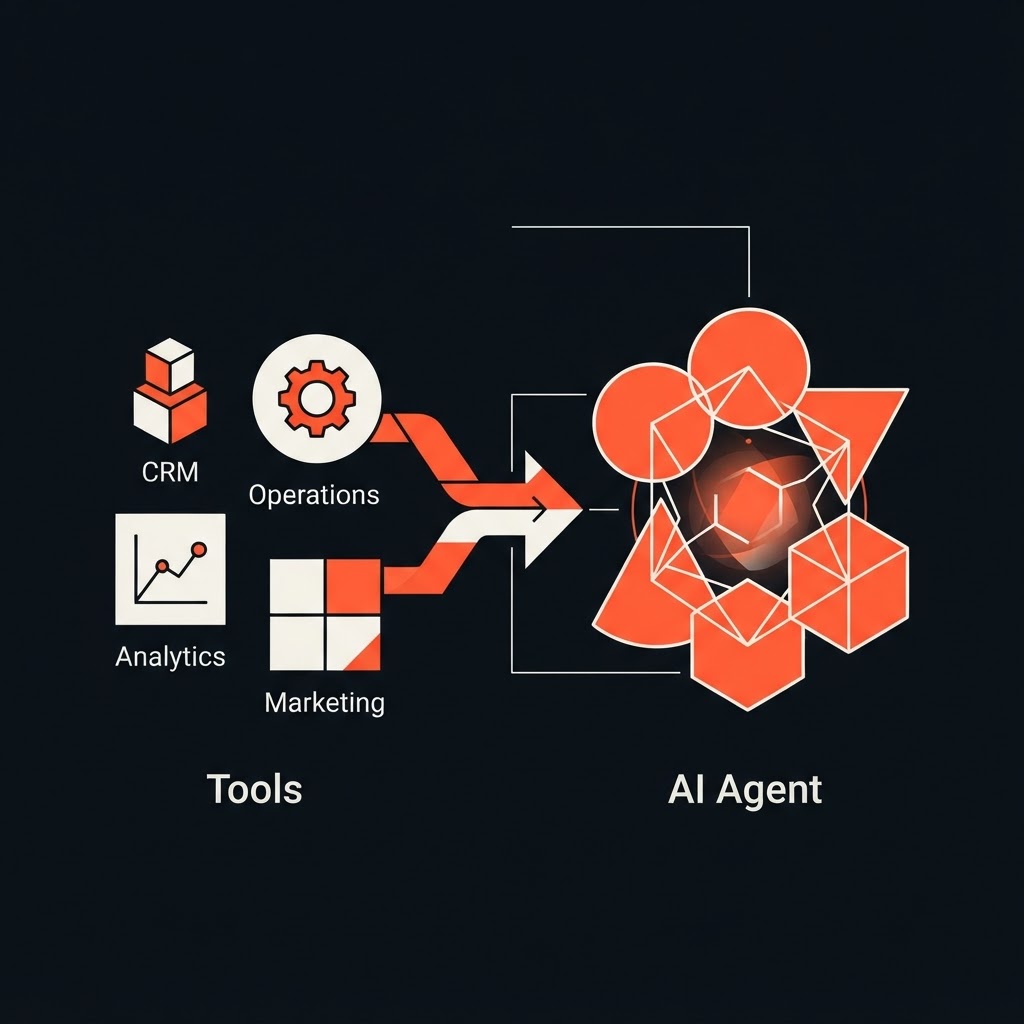
Small businesses are shifting from simple AI tools to autonomous agents that manage entire workflows. Discover how an AI second brain provides the context these agents need to succeed.
Small businesses are shifting from AI experimentation to full operational integration. Discover how an AI second brain helps you scale without increasing headcount.