Why Autonomous AI Agents Demand a Second Brain for Small Businesses
Autonomous AI agents are transforming small business operations across sales, support, and administrative workflows. Without a centralized AI second brain, these tools risk operating on fragmented context and slowing teams down.
Eric Rapaport, Founder
Quick Summary
Recent industry shifts show small and medium businesses moving rapidly from static chatbots to autonomous AI agents that act on company data. However, unanchored agents create security gaps and operational friction when team knowledge is scattered across disparate apps. An AI second brain solves this problem by uniting documentation, communication history, and standard operating procedures into a reliable context layer. This setup enables small teams to automate complex work with precision and scale output without expanding headcount.
Why Autonomous AI Agents Demand a Second Brain for Small Businesses
Recent enterprise developments from major software vendors and research groups, including findings highlighted by AI Business, point to an undeniable trend: the era of isolated AI chat prompts is giving way to autonomous AI agents. Small and medium enterprises are no longer satisfied using artificial intelligence merely to rephrase emails or draft blog drafts. Instead, growing teams are deploying systems capable of executing multi-step workflows, answering client inquiries, and pulling records across internal tools.
According to recent findings from the Salesforce Small and Medium Business Trends Report, three out of four SMBs now invest in AI, with growing businesses nearly twice as likely to adopt these tools as those falling behind. Yet as companies introduce autonomous software agents into daily workflows, an unexpected bottleneck emerges: fragmented context.
An agent is only as reliable as the institutional knowledge it can access. When standard operating procedures, past customer conversations, and project files remain scattered across team drives and chat apps, AI tools hallucinate or stall. To turn autonomous AI into an operational engine, small businesses need a foundational architecture: an AI second brain.
The Shift from Simple Prompts to Autonomous Execution
Over the past year, small business adoption of generative tools followed an experimental path. Staff members tested web-based interfaces to draft customer responses, summarize transcripts, or brainstorm campaign angles. While helpful, this required constant human supervision. Every session started from scratch because the underlying model held zero memory of the business.
Today, the landscape looks very different. Tools like Salesforce Agentforce and modular builder platforms are pushing agentic workflows directly into customer relationship management software and internal communication channels. Modern agents can trigger software actions, monitor project boards, update customer records, and triage incoming leads.
When these systems work, they eliminate manual data entry and shave hours off routine operations. Nine out of ten small businesses using AI report measurable efficiency gains, according to Salesforce data. But as autonomy expands, so does the risk profile. Without structured guardrails and proprietary context, automated agents risk sharing outdated policies, generating inaccurate pricing, or failing silent checks.
The Context Problem Holding Back Small Teams
Most small businesses operate with implicit knowledge. The founder, senior project managers, and lead technicians carry crucial operating instructions in their heads. Crucial client quirks live in private email threads. Core pricing exceptions reside in undocumented spreadsheets.
When a human joins the team, they learn through weeks of shadowing and clarifying questions. An AI agent cannot do that. When pointed at fragmented repositories, generic language models make confident assumptions that lead to operational errors. In fact, research shows that data security and system reliability remain the number one concern holding business leaders back from adopting deeper automation.
Feeding disorganized folders into an agent does not solve the challenge. It creates information collision, where the AI pulls a 2022 policy document to address a 2026 client request. To unlock speed, teams must first centralize and curate what their company actually knows.
How an AI Second Brain Accelerates Daily Operations
An AI second brain acts as a centralized knowledge operating system for your business. Instead of treating artificial intelligence as a disconnected chat window, a second brain links your core documentation, past project outcomes, service guidelines, and operational playbooks into a unified vector database.
This structure fundamentally changes how small teams get work done:
- Instant Retrieval Across Every Channel: Rather than spending thirty minutes hunting for a signed contract clause or past proposal scope, team members query their internal second brain in plain language and receive precise, source-backed answers within seconds.
- Reliable Grounding for Autonomous Agents: When an AI agent handles customer onboarding or support tickets, it queries the second brain first. This ensures the output reflects your current brand voice, active service terms, and up-to-date pricing schedules.
- Faster Employee Ramp Times: New hires access institutional knowledge on demand without pulling experienced managers away from high-value client work.
- Consistent Decision Making: Leaders can train their second brain on core company principles, allowing team members to evaluate trade-offs against established business strategy.
Building for Sustainable Speed
Deploying AI should not add another complicated dashboard to your team's daily checklist. The goal is removing operational friction so your core team can focus on client relationships and revenue growth.
As agentic AI becomes the default standard for business software, companies that organize their proprietary data will move dramatically faster than competitors relying on generic prompts. An AI second brain bridges the gap between raw machine intelligence and your unique business expertise, giving your team the speed of enterprise automation with the agility of a focused small business.
Rather have this built for you? That's what we do.
Leave a Comment
Comments (0)
Related Articles

Small businesses are moving past basic AI experimentation toward strategic adoption of intelligent systems. An AI second brain offers a way to centralize your company knowledge and automate complex workflows.
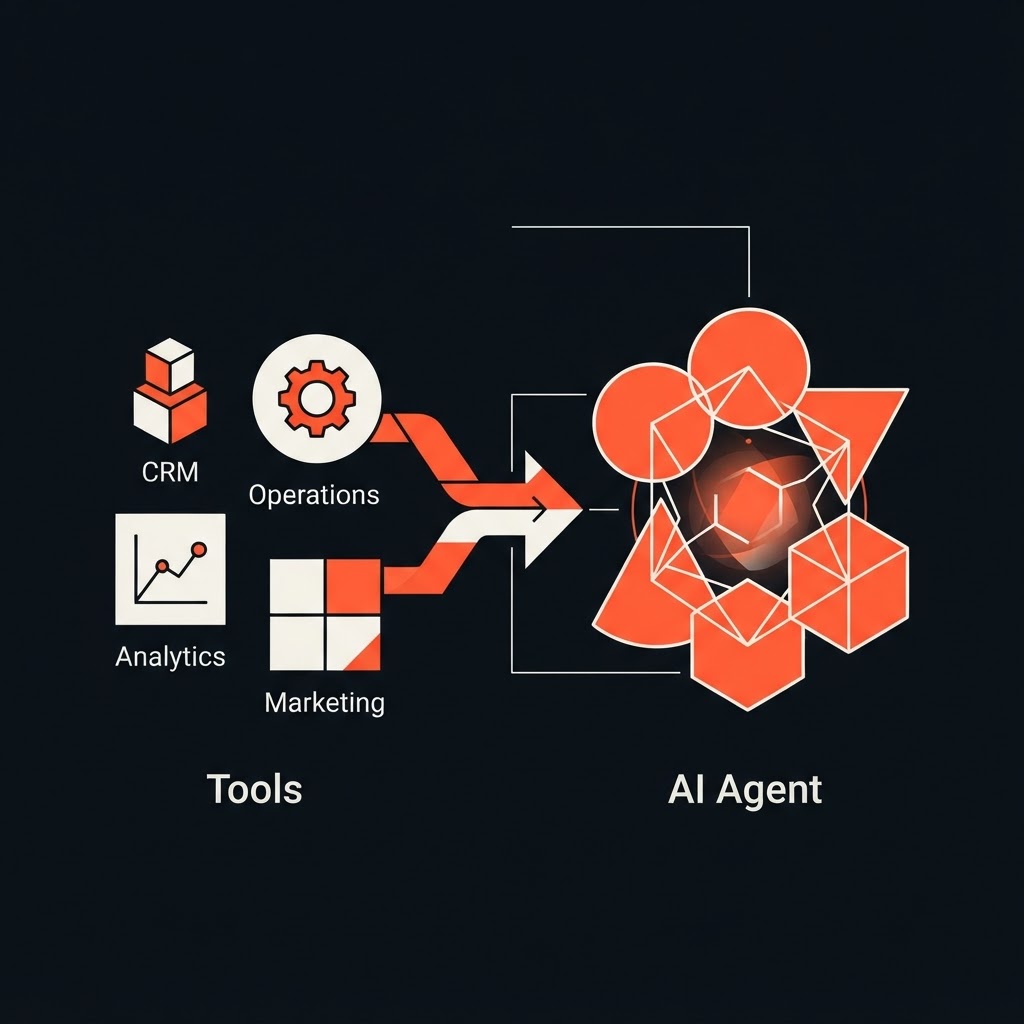
Small businesses are shifting from simple AI tools to autonomous agents that manage entire workflows. Discover how an AI second brain provides the context these agents need to succeed.
Meta recently launched AI features that allow small business owners to connect their social media accounts with Google Workspace. This shift from generic AI to data-driven insights is the first step toward building a functional AI second brain.