Moving Beyond Chatbots: Why Your Small Business Needs an AI Second Brain
Small businesses are moving past basic AI experimentation toward strategic adoption of intelligent systems. An AI second brain offers a way to centralize your company knowledge and automate complex workflows.
Eric Rapaport, Founder
Quick Summary
Recent industry shifts show that small and medium-sized businesses are moving from passive AI observation to active, strategic implementation. While many owners start with simple chatbots, the real competitive advantage lies in building an AI second brain that acts as a centralized repository for business context. By integrating your unique data into a structured AI system, you can automate decision-making and reduce the time spent searching for information. This approach transforms AI from a novelty into a core engine for operational speed and growth.
Moving Beyond Chatbots: Why Your Small Business Needs an AI Second Brain
For the past few years, small business owners have been told that artificial intelligence is the future. Many have dipped their toes into the water by using basic chatbots to draft emails or summarize meeting notes. While these tools provide quick wins, they often function as isolated islands of productivity. As we move through 2026, the conversation is shifting. The most successful small and medium-sized businesses are moving away from simple experimentation and toward a more robust approach: the AI second brain.
The Problem with Isolated AI Tools
Most small businesses currently use AI in a fragmented way. You might use one tool for marketing copy, another for customer support, and a third for data analysis. The issue is that these tools do not talk to each other. They lack the context of your specific business history, your unique brand voice, and your internal processes. When you ask a generic chatbot for advice, it provides a generic answer. It does not know your past projects, your client preferences, or the specific challenges your team faced last quarter.
This is where the concept of an AI second brain becomes essential. Instead of treating AI as a collection of separate apps, you treat it as a unified system that holds your company knowledge. It is a digital repository that learns from your documents, your communications, and your workflows to provide answers that are actually relevant to your business.
What is an AI Second Brain?
An AI second brain is a centralized, intelligent layer that sits on top of your existing business data. It acts as a permanent memory for your organization. When you feed your internal documentation, project archives, and operational playbooks into this system, the AI gains the ability to act as a highly informed team member.
For a small business owner, this means you no longer have to hunt through folders or email threads to find the answer to a recurring question. You can ask your second brain, "What was our process for onboarding new clients last year?" or "Draft a proposal based on the successful structure we used for our last three projects." The AI provides an answer based on your actual history, not just general internet knowledge.
Why Speed Matters for SMBs
In a competitive market, speed is your greatest asset. Large enterprises have the luxury of massive teams to handle administrative overhead. Small businesses do not. Every hour you spend searching for information or recreating work is an hour you are not spending on growth or customer service.
By implementing an AI second brain, you reclaim that time. You reduce the cognitive load on your team because they no longer need to memorize every detail of every project. The system handles the retrieval and synthesis of information, allowing your employees to focus on high-value tasks that require human judgment and creativity.
Building Your Strategy
Adopting this technology does not require a massive IT budget or a team of data scientists. The goal is to start by identifying the most repetitive, knowledge-heavy tasks in your business. Where do you find yourself repeating the same instructions? Where do you lose the most time searching for files?
Start by centralizing your core knowledge base. Once your data is organized, you can connect it to an AI system that allows for natural language queries. This is not about replacing your team; it is about giving them a superpower. When your staff has instant access to the collective wisdom of your business, they work faster, make fewer mistakes, and provide a more consistent experience for your customers.
As we look toward the rest of the year, the businesses that win will be those that stop treating AI as a toy and start treating it as a foundational part of their infrastructure. An AI second brain is the most effective way to bridge that gap, turning your company data into a competitive advantage that scales with you.
Rather have this built for you? That's what we do.
Leave a Comment
Comments (0)
Related Articles
Autonomous AI agents are transforming small business operations across sales, support, and administrative workflows. Without a centralized AI second brain, these tools risk operating on fragmented context and slowing teams down.
Small business owners are increasingly turning to AI to reclaim time and drive growth. Building an AI second brain is the next step to turning scattered information into a competitive advantage.
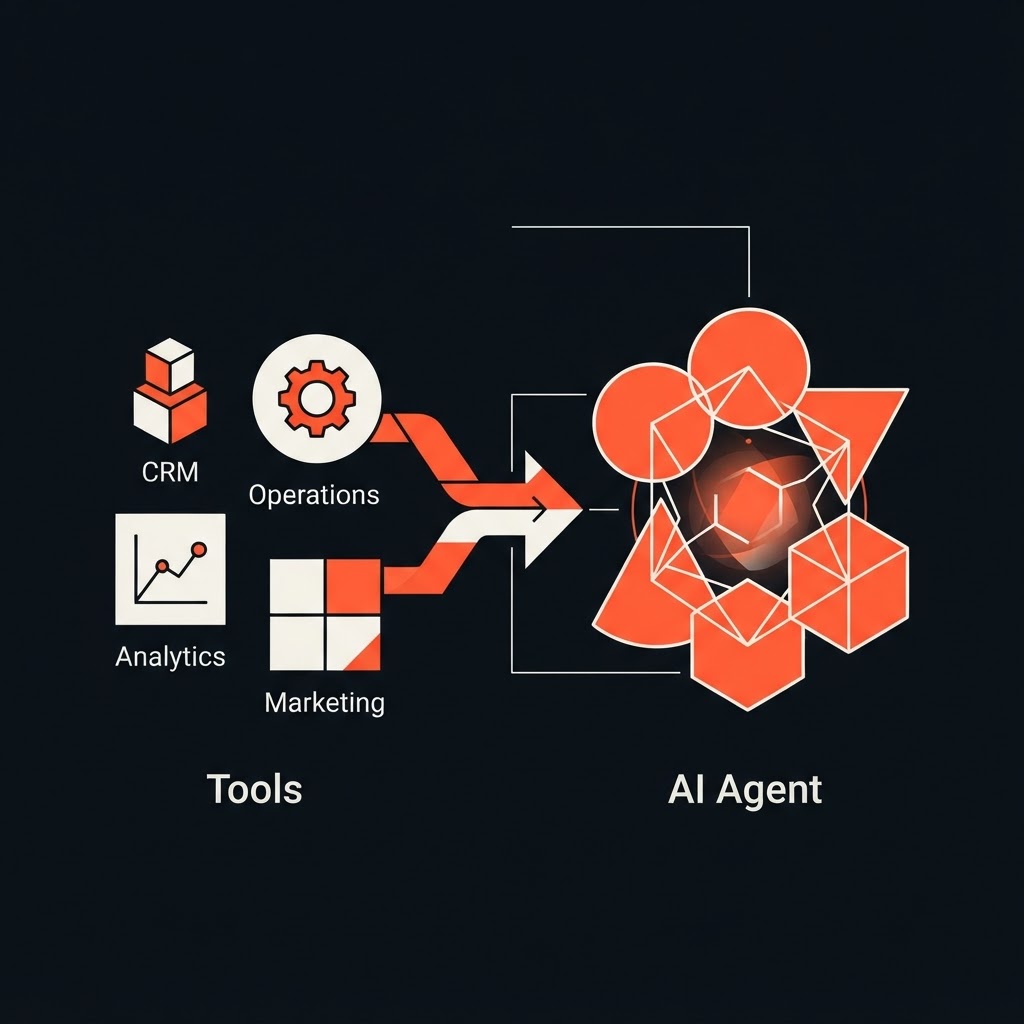
Small businesses are shifting from simple AI tools to autonomous agents that manage entire workflows. Discover how an AI second brain provides the context these agents need to succeed.